For families
A star to sit with, not to stare at
This desk is written so a curious household can enjoy official wording without turning it into a lesson plan, and without anyone being invited to look at the Sun.
A safety note, not an observing guide. NASA Science says, “Hopefully, it goes without saying — but never look directly at the Sun without protecting your eyes.” This site does not tell you how to look at the Sun, and it is not a guide to filters or eclipses.
A good starting question is the same one on the home page: how many Earths? The fact sheet’s answers — 109.2 across, 1,304,000 inside, 332,900 to match the mass — are precise, and NASA Science’s rounded wording is allowed to sit beside them. [source] [source] The scale drawing on the desk is honest about the speck: if the Sun is 200 pixels across, the Earth is about two.
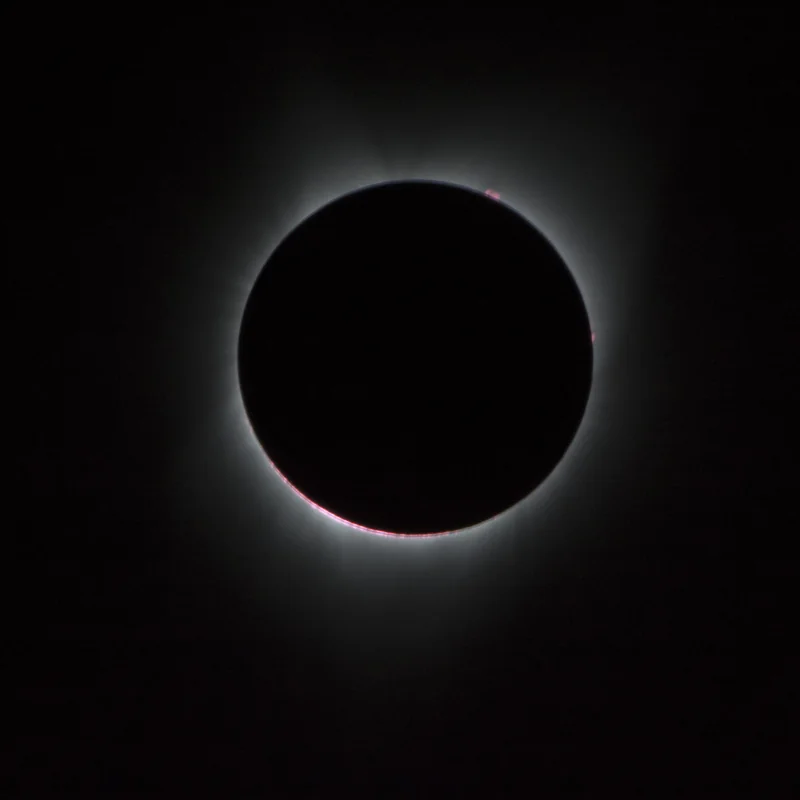
A good second question is why some pictures are gold. They are not a paint-box version of a yellow disk. They are extreme-ultraviolet views, with colour added. The white crown in Carla Thomas’s 2017 photograph is the corona in ordinary light, visible because the Moon has covered the photosphere. [source]
A good third question is whether the Sun will go on. Official wording says it is a little less than halfway through its lifetime, and will last another 5 billion years or so before it becomes a white dwarf, after a red-giant chapter that will engulf Mercury and Venus, and possibly Earth as well. [source] The “possibly” is a gentle official word, and worth keeping.
The quiz and the timeline are short, and they use only those official pages. The fact sheets are typographic, with no photographs inside, and they are free.
Enjoyed this desk of 109.2 Earths, a photosphere that is not solid, and a corona that gets hotter as it leaves?
No pop-ups. No intrusive advertising. Just interesting stuff. A little support helps the next planets.im site get built.