sun.planets.im
How many Earths would fill the Sun?
The official fact sheet has a precise answer, and NASA Science has a rounded one. This desk keeps both, and starts with a star that is not a planet.
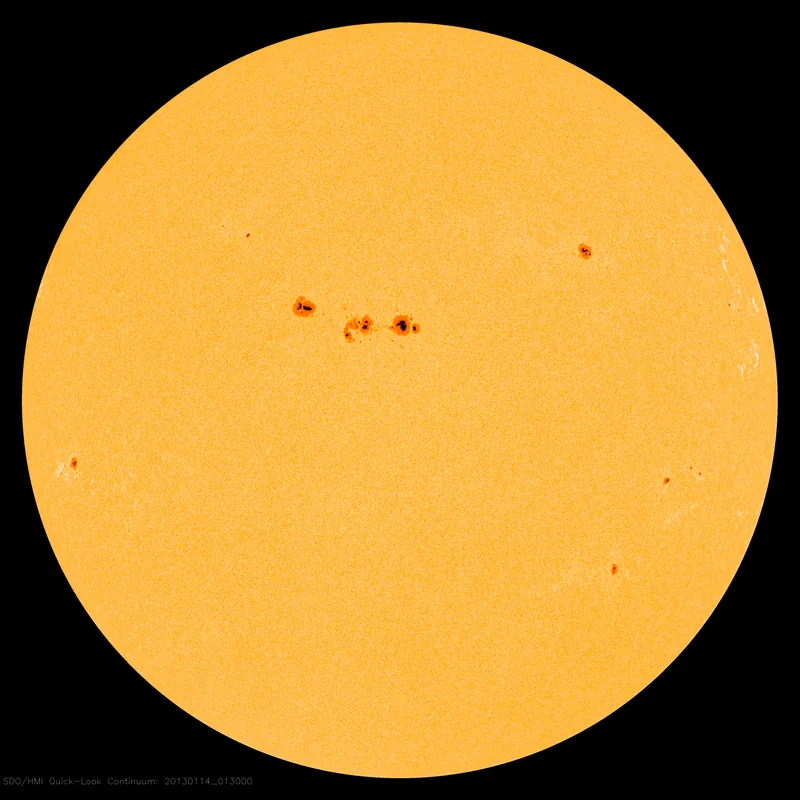
NASA Science calls our Sun “a 4.5 billion-year-old yellow dwarf star – a hot glowing ball of hydrogen and helium – at the center of our solar system.” [source] It is “about 93 million miles (150 million kilometers) from Earth,” and “it’s our solar system’s only star.” [source] The NASA / NSSDCA Sun Fact Sheet, curated by Dr David R. Williams, gives the same neighbourhood in tabulated form: a mean distance of 149.6 million kilometres, a spectral type of G2 V, and a volumetric mean radius 109.2 times Earth’s. [source]
A safety note, not an observing guide. NASA Science says, “Hopefully, it goes without saying — but never look directly at the Sun without protecting your eyes.” This site does not tell you how to look at the Sun, and it is not a guide to filters or eclipses.
How many Earths?
The short list on NASA Science says the Sun is “about 100 times wider than Earth.” [source] The fact sheet’s official ratio is 109.2. [source] Those are the same comparison, rounded differently, and this desk uses 109.2 for the scale drawing. The same pairing happens with the volume — 1,304,000 on the fact sheet, “1.3 million” in the public wording — and with the mass — 332,900 beside “more than 330,000.” [source] [source] The figures that do not quite agree are kept on the field notes, not blended in the captions.
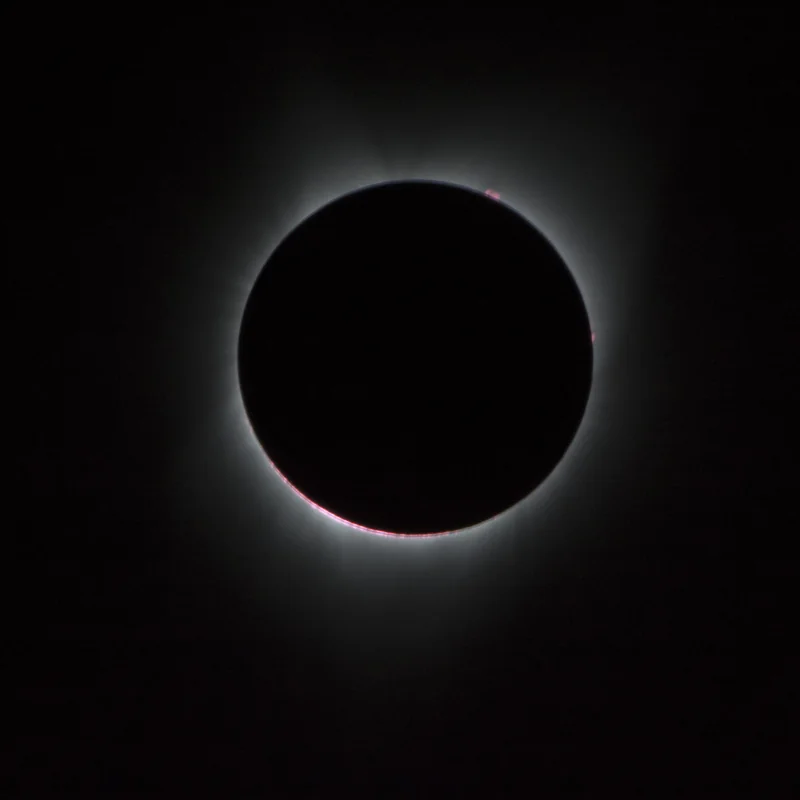
The white crown in Carla Thomas’s 2017 photograph is the corona, visible in ordinary light only when the Moon covers the photosphere. NASA Science says that in a total eclipse “the chromosphere looks like a fine, red rim around the Sun, while the corona forms a beautiful white crown.” [source] The gold pictures elsewhere on this desk are different: they are extreme-ultraviolet views, with colour added, not the disk your eye would see.
Open the desk Free fact sheets
Enjoyed this desk of 109.2 Earths, a photosphere that is not solid, and a corona that gets hotter as it leaves?
No pop-ups. No intrusive advertising. Just interesting stuff. A little support helps the next planets.im site get built.