Discoveries
Things the official pages say, that are easy to miss
A fact sheet and a public facts page already hold a small museum of surprises, if you let each official sentence keep its own wording.
Earth exists inside the Sun’s atmosphere
“Once material leaves the corona at supersonic speeds, it becomes the solar wind, which forms a huge magnetic ‘bubble’ around the Sun, called the heliosphere. The heliosphere extends beyond the orbit of the planets in our solar system. Thus, Earth exists inside the Sun’s atmosphere.” [source] Outside that bubble is interstellar space.
A volume of 1.3 million Earths holds only about 333,000 Earths of mass
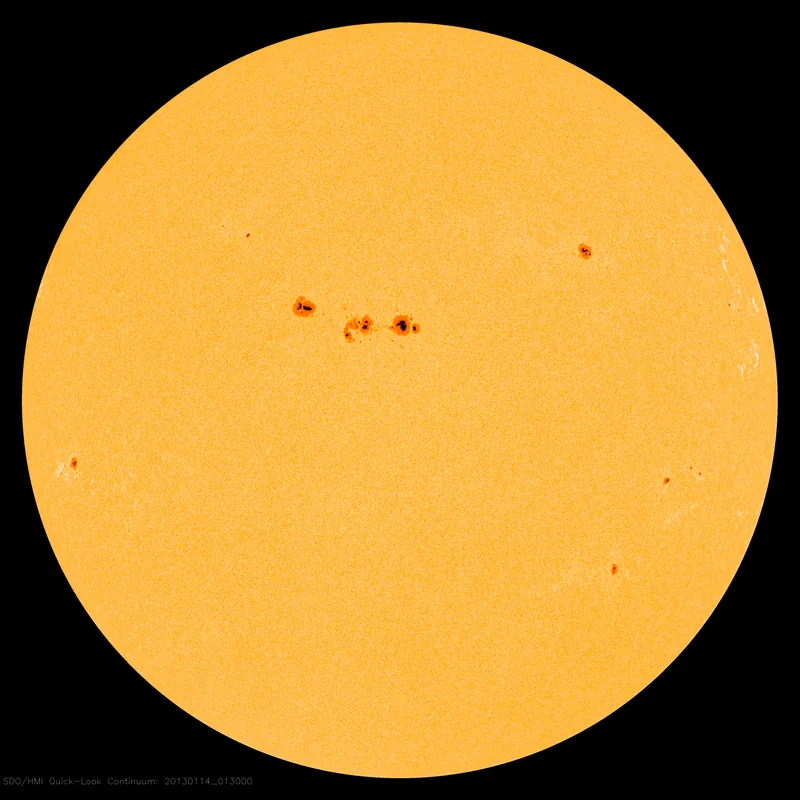
The fact sheet’s volume ratio is 1,304,000 and its mass ratio is 332,900, because the mean-density ratio is 0.255. [source] The Sun is huge, and also, officially, much less dense than the Earth.
Light from the core takes about 170,000 years to reach the convection zone
“Energy from the core is carried outward by radiation. This radiation bounces around the radiative zone, taking about 170,000 years to get from the core to the top of the convection zone.” [source] The sunlight of any given afternoon began that walk a very long time ago, in official wording.
The corona gets hotter as it leaves
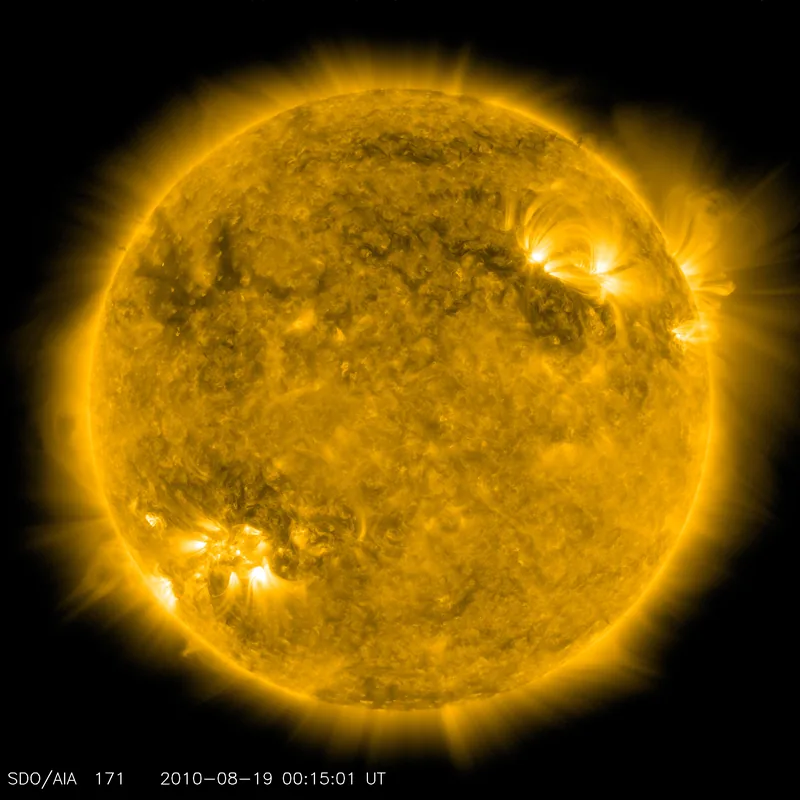
“Imagine walking away from a bonfire only to get warmer.” [source] NASA Science still calls the source of that heat “a major unsolved puzzle.”
A day is not one number
Twenty-five Earth days at the equator, thirty-six at the poles, and 609.12 hours at 16 degrees latitude on the fact sheet, with a formula that changes as you move. [source] [source]
Two official ages, and a careful “possibly”
A 4.5 billion-year-old yellow dwarf, formed about 4.6 billion years ago; a future red giant that will engulf Mercury and Venus, “and possibly Earth as well.” [source]
Newspapers, readable by aurora light
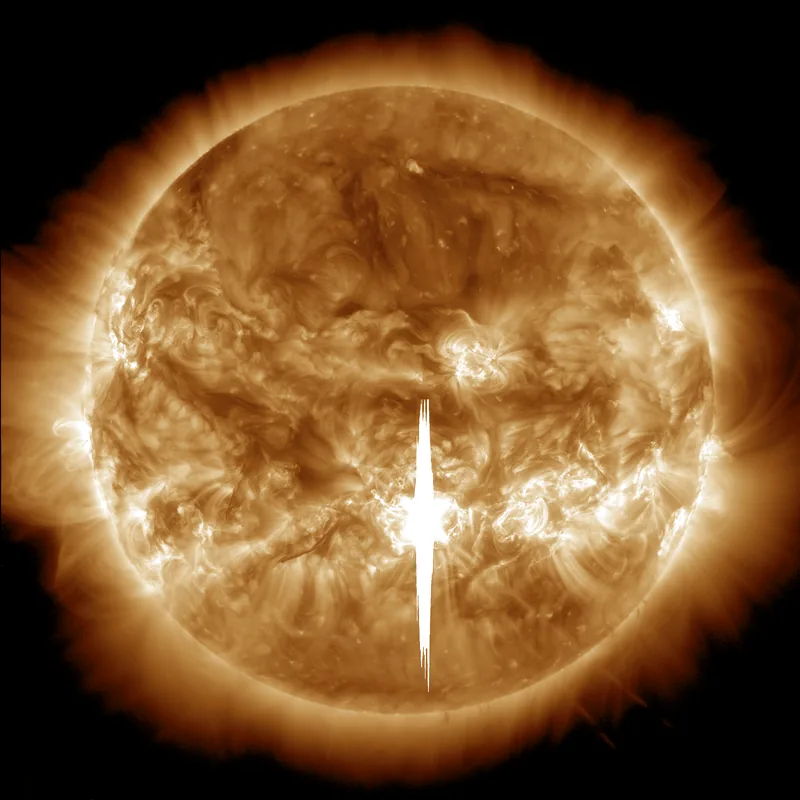
The official Carrington story includes telegraph paper set on fire, and auroras “so brilliant that newspapers could be read as easily as in daylight,” as far south as Cuba and Hawaii. [source]
Enjoyed this desk of 109.2 Earths, a photosphere that is not solid, and a corona that gets hotter as it leaves?
No pop-ups. No intrusive advertising. Just interesting stuff. A little support helps the next planets.im site get built.